





Excellence Begins Here
ISO 14097 Greenhouse Gas Management Certification Overview
The ISO 14097 Greenhouse Gas Management Certification validates a candidate’s knowledge of climate-related financial risk assessment and greenhouse gas (GHG) management principles. The examination assesses understanding of environmental governance frameworks, risk disclosure mechanisms, and sustainability reporting practices aligned with global climate objectives.
It evaluates competence in identifying climate-related risks, measuring emissions impact, integrating sustainability strategies, and supporting transparent reporting. Successful candidates demonstrate foundational capability in applying structured environmental risk management practices within organizational and financial contexts.
The ISO 14097 Greenhouse Gas Management Certification assesses a candidate’s ability to apply climate risk evaluation principles within organizational and financial systems. The examination evaluates understanding of governance frameworks, emissions reporting methodologies, and structured sustainability assessment techniques.
The certification evaluates a candidate’s ability to:
- Interpret climate-related risk management principles aligned with ISO 14097
- Identify greenhouse gas emission sources and categorize environmental impacts
- Evaluate climate-related financial disclosures and reporting structures
- Support integration of sustainability metrics into organizational strategy
- Assess risk mitigation strategies addressing environmental exposure
- Contribute to structured sustainability governance and oversight mechanisms

Skills You Will Gain
Emissions Identification
Ability to identify and classify greenhouse gas emission sources across organizational activities. This supports structured environmental impact assessment.
Climate Risk Evaluation
Ability to analyze climate-related risks affecting financial and operational performance. This strengthens sustainability risk awareness.
Disclosure Review
Ability to evaluate climate-related financial disclosures for accuracy and completeness. This improves reporting transparency and accountability.
Sustainability Integration
Ability to align environmental performance indicators with organizational strategy and governance frameworks. This enhances structured ESG implementation.
Impact Measurement
Ability to assess measurable environmental performance data using recognized reporting standards. This supports data-driven sustainability decisions.
Governance Support
Ability to contribute to environmental risk governance structures and oversight mechanisms. This strengthens compliance and strategic environmental accountability.
Exam

Multiple Choice
30 Questions
40 Minutes
Closed Book
 Minimum required score to pass: 60%
Key Exam Highlights
- Standardized Assessment
- Competency-Based Evaluation
- Secure Digital Examination Platform
- International Recognition
Why This Certification Matters?
- Strengthen Climate Risk Oversight
Assess climate-related risks and greenhouse gas impacts within structured governance frameworks. This enhances organizational sustainability readiness. - Improve Disclosure Confidence
Evaluate and support climate-related reporting aligned with recognized environmental standards. This increases stakeholder trust and transparency. - Enhance ESG Integration
Integrate sustainability metrics into operational and financial decision-making processes. This supports responsible and compliant business strategy. - Support Long-Term Environmental Strategy
Contribute to structured greenhouse gas management and mitigation initiatives. This strengthens resilience against evolving climate regulations and risks.
Qualify for In-Demand Jobs
- Sustainability Manager
- Environmental Risk Analyst
- ESG Compliance Officer
- Climate Risk Consultant
- Environmental Reporting Specialist
- Corporate Sustainability Officer
Certification Roadmap
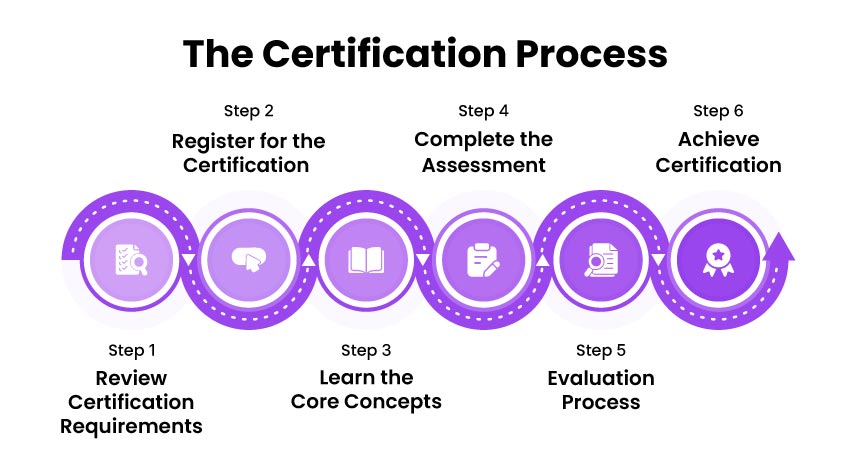
Step Forward with Globally Recognized Certification
Career Growth
Certified professionals report faster career advancement and higher recognition within their organizations after earning their certification. Many experience salary growth, expanded responsibilities.

Boost Your Career & Income

Increase your earning potential with globally valued certification.

Global Certification Board make 20% higher salaries worldwide
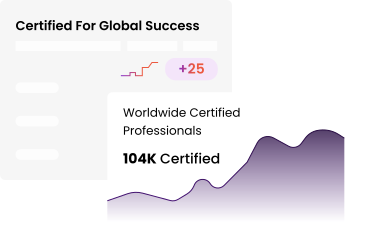
Globally Certified Professionals Over Time
Our certification program continues to grow worldwide as more learners upgrade their skills with globally recognized expertise. Certified individuals demonstrate improved .
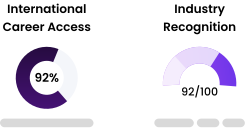
Global Opportunities
Certified professionals gain access to international job roles, cross-border work experience, and leadership positions in top organizations. and leadership positions in top organizations.

Build a Future-Ready Global Certification Career for 2026 — Backed by an Internationally Recognized Diploma
Accredited Certification issued by Global Certification Council
Frequently Asked Questions
ISO 14097 Greenhouse Gas Management Certification validates knowledge of climate finance and greenhouse gas–related investment frameworks. It focuses on transparency and consistency in assessing climate-related financial activities. The credential reflects competence in understanding internationally recognized environmental governance principles.
Climate governance and sustainability expertise are increasingly valued across industries. This certification demonstrates understanding of greenhouse gas management and climate finance alignment. It can support career growth in sustainability, ESG, risk management, and environmental compliance roles.
ISO standards are internationally recognized and adopted across multiple regions. ISO 14097 supports global consistency in climate-related financial reporting and greenhouse gas management. This gives the certification strong international relevance.
ISO 14097 is particularly relevant to financial institutions, investment firms, insurance companies, and large corporations. It is also applicable to organizations integrating climate risk into governance frameworks. Any entity involved in climate-related financial disclosures may benefit from its principles.
The certification validates understanding of greenhouse gas accounting concepts and climate finance alignment. It confirms knowledge of transparency, reporting consistency, and environmental risk considerations. It also demonstrates awareness of sustainability governance frameworks.
ISO 14097 supports structured evaluation of climate-related financial risks and opportunities. It promotes consistent methodologies for assessing greenhouse gas impacts in investment activities. This helps organizations strengthen climate risk transparency and accountability.
The certification can support roles such as ESG Analyst, Sustainability Manager, Climate Risk Specialist, or Environmental Compliance Officer. It demonstrates structured knowledge of greenhouse gas management principles. Many organizations value certified professionals in sustainability-driven functions.
Yes, ISO 14097 is closely linked to climate finance and investment decision-making. It supports understanding of how greenhouse gas considerations influence financial strategies. This makes it particularly relevant to finance and investment professionals.
The standard promotes transparency, comparability, and credibility in climate-related financial reporting. Certified professionals can help organizations align environmental objectives with financial strategies. This strengthens sustainability governance and stakeholder confidence.
Yes, ISO 14097 certification complements other sustainability and environmental management standards. It strengthens expertise in greenhouse gas governance and climate finance frameworks. It can enhance professional credibility in broader ESG and environmental strategy roles.
Related Certifications
No Certification available.


